





Car Suspension Repair vs Replacement | Expert Advice & Tips
Your car’s suspension keeps the ride smooth and the vehicle stable. It absorbs shocks, supports weight, and helps maintain control on the road. When suspension parts wear out, driving comfort and safety both suffer.
Many drivers are unsure whether to repair damaged parts or replace the system. Small issues can often be fixed quickly. But serious wear or multiple failing components usually require replacement.
Delaying suspension services can make problems worse. You may notice rough driving, poor handling, or uneven tyre wear. Fixing issues early helps avoid higher costs and safety risks.
This guide explains how to choose between repair and replacement, so you can keep your car safe, stable, and comfortable to drive.
How Your Car’s Suspension System Keeps Every Drive Smooth and Stable
Your vehicle suspension system is designed to keep your ride comfortable and controlled. It absorbs shocks from bumps, potholes, and uneven roads, so you don’t feel every impact. At the same time, it keeps your tyres firmly in contact with the road, which helps maintain balance and stability while driving.
Suspension also plays a key role in steering, braking, and overall handling. It supports the vehicle’s weight, reduces body movement during turns, and helps the car stay at a level when you speed up or slow down. Without a properly working suspension, driving becomes rough, unstable, and less safe.
Warning Signs Your Car’s Suspension Needs Immediate Attention
Many drivers delay suspension service because problems develop slowly. The ride may feel slightly rough at first, then gradually worse over time. But certain symptoms clearly show that something is wrong and needs attention.
Driving Symptoms, You May Feel
- The car keeps bouncing after hitting bumps.
- Front of the vehicle dips when braking.
- The car leans too much during turns.
- Steering feels loose or unstable.
- Ride feels rough or vibrates.
Mechanical Warning Signs
- Clunking or knocking noises over bumps.
- Fluid leaking from shocks or struts.
- The vehicle is sitting lower than normal.
- The steering wheel not centered properly.
Tyre & Alignment Clues
- Uneven tyre wear
- The car is pulling to one side
- Tyres are worn out faster than usual.
If you notice more than one of these signs, get your suspension checked as soon as possible.
Understanding Car Suspension Repair vs Replacement
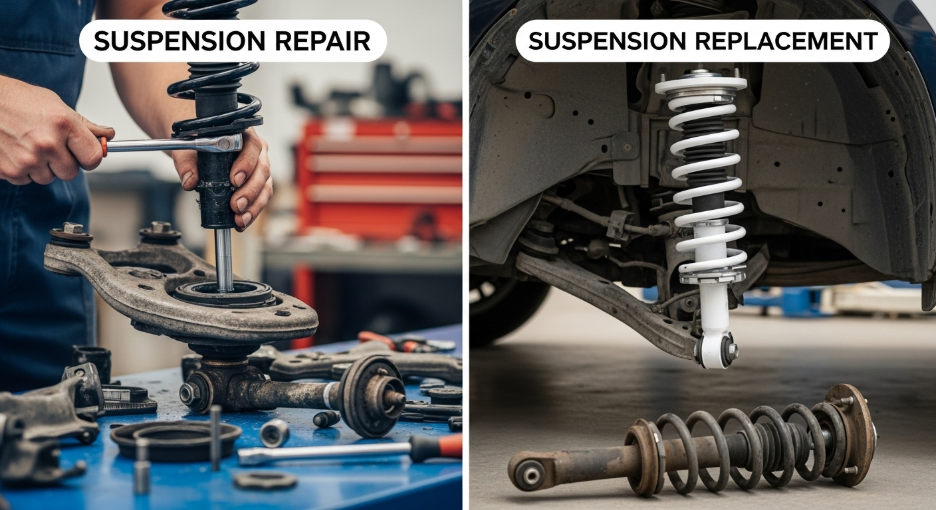
Deciding between suspension repair and replacement depends on the extent of the damage to your system. Sometimes only one part is worn and can be fixed quickly. Other times, several components are weak or failing, which means replacement is the safer and more reliable option.
Repair is usually enough when the problem is small and limited to one area. But if wear affects multiple parts or keeps coming back, replacement helps restore full performance and prevents repeated breakdowns.
In simple terms:
Repair → Fixing or restoring one damaged suspension component
Replacement → Installing new parts to restore the full suspension system.
The right choice depends on the part condition, vehicle mileage, and long-term cost. Minor wear often needs repair, while major or widespread damage usually requires replacement.
When Suspension Repair Is the Right Choice
Suspension repair is the best option when the problem is limited to one area and the rest of the system is still in good condition. If surrounding components are strong and functioning properly, fixing the damaged part can safely restore performance without major expense.
Situations Where Repair Works Well
Repair is usually effective when the issue is small or just beginning, such as:
- Minor wear in bushings or ball joints
- Small leaks from shocks in the early stages of wear
- Loose or worn mounting hardware
- Slight alignment imbalance
- Failure of a single suspension component
When the overall system is healthy, targeted repair can quickly restore normal ride comfort and stability.
Benefits of Suspension Repair
Choosing repair offers several practical advantages:
- Lower upfront cost
- Faster service time
- Replacement of only the faulty part
- Keeps original factory components intact
Repair is most effective when problems are caught early, before they spread to other parts.
When Suspension Replacement Becomes Necessary
Suspension replacement is needed when damage is widespread or the system can’t perform safely. If several parts are worn or failing, replacement restores balance, control, and ride quality.
It’s also recommended when the vehicle feels unstable or unsafe to drive, as repairs may only provide temporary relief.
When Replacement Is Usually Required
Replacement becomes necessary when suspension wear is severe or affects several parts, such as:
- Multiple components failing at the same time
- Worn shocks or struts that no longer absorb impact
- Springs are losing their load-bearing strength.
- Structural parts weakened by rust or corrosion
- Vehicle mileage beyond the normal suspension lifespan
- Ride instability that affects safety and control
In these cases, full or partial replacement helps restore the system to proper working order.
Advantages of Suspension Replacement
Replacing worn suspension parts provides long-term benefits, including:
- Restores factory-level ride performance
- Improves stability and overall comfort
- Enhances steering accuracy and control
- Reduces repeated repair expenses
- Helps extend tyre life and improve alignment
In high-wear driving conditions, replacement is often the most practical and cost-effective long-term solution.
Environmental Factors That Accelerate Suspension Wear
Your suspension wears faster depending on where and how you drive. Roads, weather, and vehicle load all add stress to components over time. Knowing these factors helps prevent premature damage.
Key Factors
- Potholes and rough roads: Cause extra shock and strut stress
- Heavy traffic and sudden braking: Increase wear on bushings and joints
- High temperatures: Heat can weaken rubber parts and fluids
- Moisture and rain: Lead to rust and corrosion on metal components
- Heavy loads or frequent passengers: Adds pressure on springs and shocks.
Preventive Tips to Extend Suspension Life
Taking care of your suspension can prevent major problems and keep your ride smooth. Small habits and regular checks help extend the life of your suspension.
- Check wheel alignment regularly to keep tyres even and reduce stress on the suspension.
- Maintain proper tyre pressure to prevent extra load on shocks and struts.
- Avoid overloading your vehicle to reduce strain on springs and suspension parts.
- Drive carefully over bumps and potholes to minimize sudden shocks.
- Inspect suspension parts periodically to catch issues early.
- Schedule professional inspections to identify problems before they become serious.
Why You Need a Professional for the Best Car Suspension Repair in Dubai
Suspension systems are complex and require expert knowledge to diagnose and fix properly. Attempting repairs without professional skills can lead to incomplete fixes, repeated problems, or even safety risks.
A trained technician can accurately assess wear, identify all damaged components, and recommend whether repair or replacement is the best option. They also have the right tools to restore proper ride quality and handling.
Choosing the best car suspension repair in Dubai ensures your vehicle stays safe, stable, and comfortable on every drive.
Conclusion
Understanding whether to repair or replace your car suspension is key to keeping your vehicle safe and comfortable. Minor issues can often be fixed with simple repairs, while widespread wear usually calls for full replacement.
Early detection and preventive maintenance help avoid bigger problems and save money over time. Regular inspections, careful driving, and timely service keep your suspension in good condition.
Working with a professional ensures the job is done correctly. Choosing the best car suspension repair in Dubai restores ride quality, handling, and safety, giving you confidence every time you drive.